.jpg)
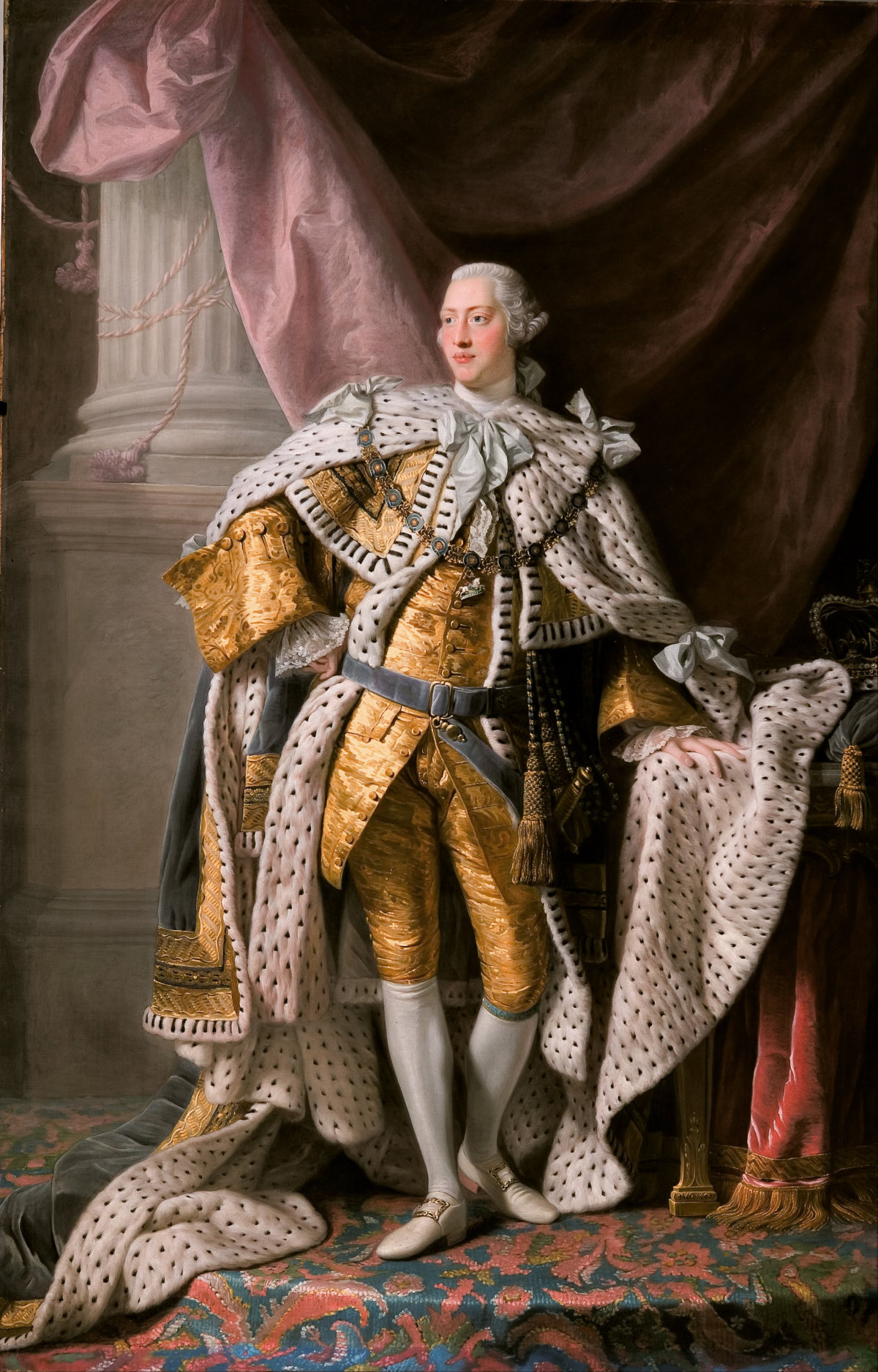
The Holy Experiment
The story of July 4, 1776, does not begin in 1776. It begins almost a hundred years earlier, with a Quaker and an idea that seemed too beautiful to work.
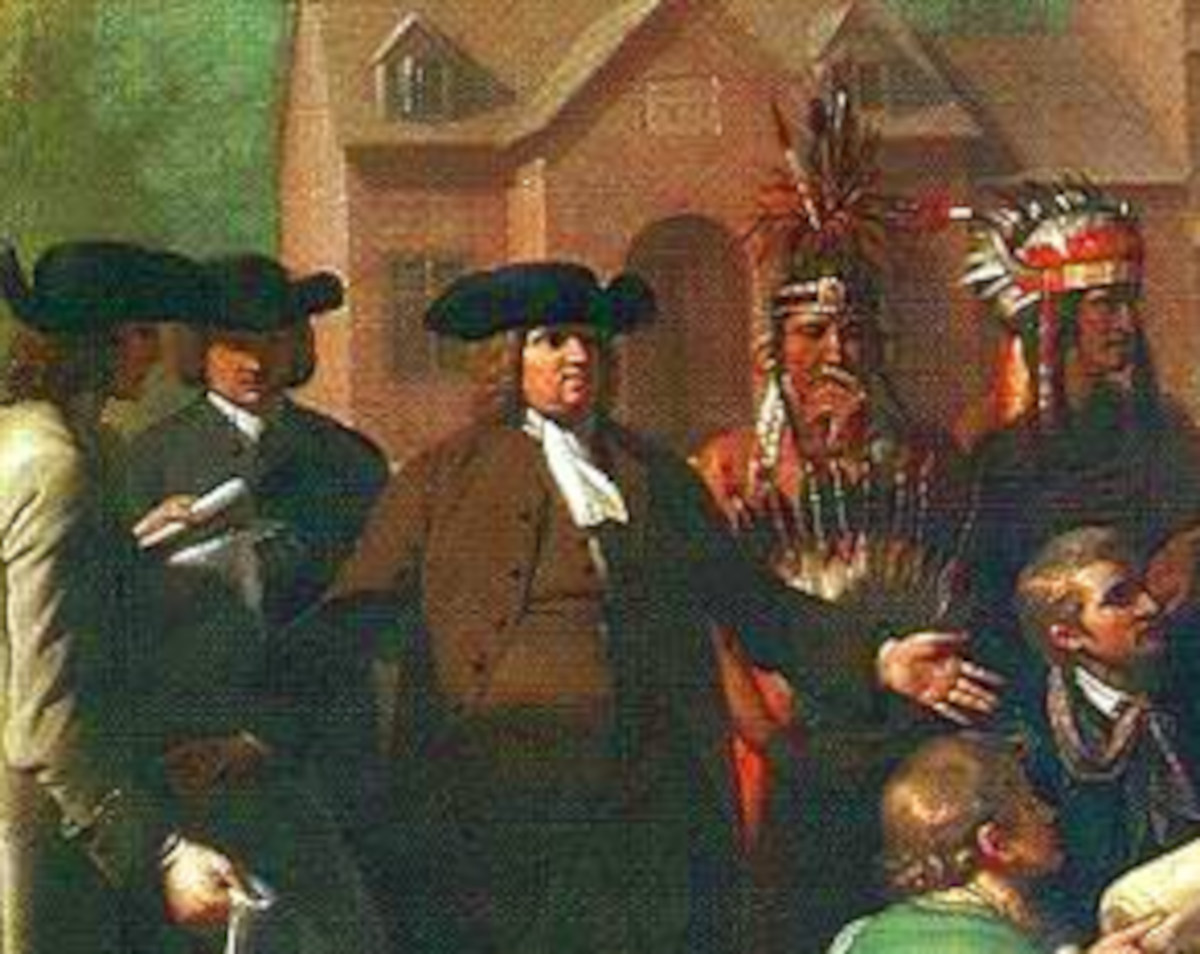
In 1681 the English Crown signed over to one of its creditors a vast stretch of forest on the far side of the Atlantic, in settlement of an old debt. The creditor was William Penn, the son of an admiral and a member of the Quakers, a sect persecuted in England. Penn called what he meant to do there his “holy experiment.” In the Charter of 1682 and in the fundamental laws of his colony he guaranteed something that existed nowhere in Europe in this form: religious freedom for anyone who believed in God. No state church. No religious test for office. He named his capital with a Greek word for brotherly love: Philadelphia.
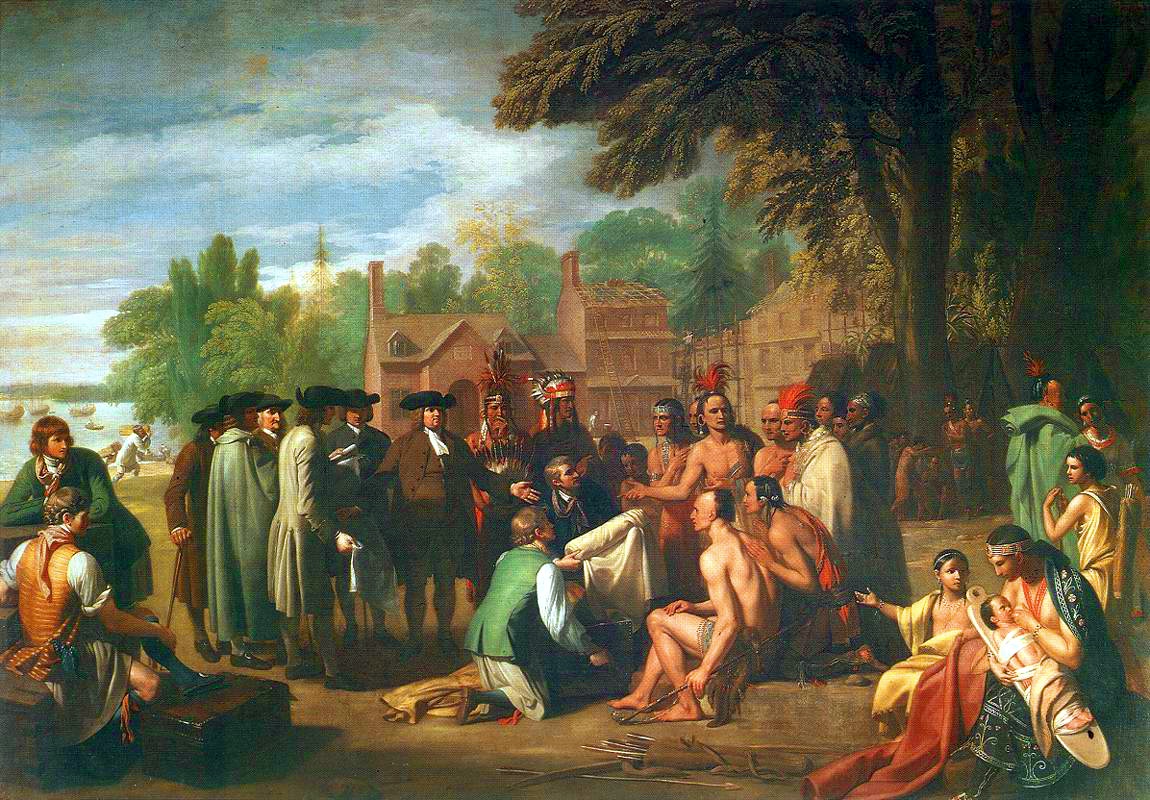
Penn was no unworldly dreamer but an idealist with a conscience and a cool head at once. As a Quaker he rejected violence on principle. And even had he wanted to take the land by force, he could scarcely have managed it at that moment. The allied tribes were too numerous and too strong, and European weapons technology was by no means superior to theirs: in the thicket of the forests, where a musket first had to be loaded through an awkward procedure, the Indians with bow and arrow were often the settlers’ betters. Penn’s colony was young and weak, surrounded by numerous, powerful Lenape.
Whoever has no army buys peace. In 1682, according to tradition beneath an elm on the bank of the Delaware, at a place called Shackamaxon, he concluded a treaty with the Lenape, bought the land instead of taking it, and learned a few scraps of their language. Voltaire later scoffed that it was the only treaty between Indians and Christians that was never sworn and never broken.
And Penn did something else with lasting consequences. He advertised his experiment in pamphlets, some of them in German, and in 1683 his agents brought the first Germans to Germantown near Philadelphia. The invitation was heard on the Rhine, in the Palatinate, in Württemberg.
Yet the great wave that a generation later carried the Weiser family across the Atlantic had a different engine. Whether it was still Penn who did the advertising, or by then the British Crown, is hard to say. Through the desperate villages ran the rumor that the last Stuart queen, Anne, would give anyone who merely asked land in the American colonies and free passage besides. A “Golden Booklet,” printed three times in 1709, praised Carolina in the most glowing colors; perhaps it took its later name from the title image, which showed the queen. How much of this was a real offer and how much the invention of shipping brokers and recruiters who earned on every emigrant — a kind of snake oil of the age — can scarcely be untangled today.
One thing, however, was certain: the Crown had its own sober reason to summon the Germans. They were to serve it, clear forests, extract tar and pitch for the navy. The writer Daniel Defoe defended taking in the refugees on economic grounds: the Germans were industrious, a blessing, not a curse. So from the very beginning two driving forces mingled, forces that would shape the whole American project — the idea of freedom and the very concrete interest of those who profited from it.
This is the story of that entanglement — and of a faith that carried the people who came to Pennsylvania: the belief in what is possible. Two hundred and fifty years after July 4, 1776, it is worth taking that faith seriously rather than smiling at it.
Leaving Württemberg
Why did people leave Württemberg? Because the southwest of Germany had scarcely known peace for a century and a half. The Thirty Years’ War had devoured a third of the population; afterward Louis the Fourteenth pushed his armies across the Rhine again and again and burned down the Palatinate. Add to this confessional pressure, the dues owed to the manorial lords, failed harvests, an icy winter of 1708 into 1709 that froze the vines. Whoever wanted to stay stayed a subject. Whoever could leave, left.
In 1709 some thirteen thousand southwest Germans reached England; eleven thousand crowded into London. It was the “poor Palatines” wave, as the British called it — even though by no means all came from the Palatinate, but just as much from Württemberg and the Kraichgau. The Crown scarcely knew what to do with the mass of people: about three thousand stayed in England, three thousand went to Ireland, a good two thousand Catholics were sent back to Rotterdam, and just under three thousand were shipped by Queen Anne’s government to New York, where they were to produce the promised naval stores. The scheme failed. The settlers moved westward into the Schoharie Valley, then southward into Pennsylvania, into the Tulpehocken country, the later Berks County — precisely where Penn’s invitation had pointed. They had been promised free land. They got almost none. They built farms anyway.
What that crossing looked like was written down by a man who lived through it himself a generation later — though one must read him with caution. Gottlieb Mittelberger, an organist and schoolmaster from Enzweihingen near Vaihingen, sailed to Philadelphia in 1750 and settled in New Providence, of all places in Henry Muhlenberg’s own home congregation. There he fell into conflict with the pastor and the congregation and returned home embittered in 1754. His book is therefore not a sober report but a cautionary tract meant to deter, and it lays it on thick accordingly. Yet the core was real. The voyage lasted fifteen weeks; people lay packed “like herrings,” each on two feet of width. Stench, dysentery, scurvy, foul water full of worms, lice one could scrape off the body. Children rarely survived the passage; on his ship, he wrote, thirty-two were lowered into the sea, and a woman who could not give birth during a storm was pushed overboard through a hatch.
And whoever arrived in Philadelphia and could not pay for the passage was sold. This “trade in human flesh” was real: buyers came aboard, looked over the healthy as at a market, and bargained over how many years they would have to serve for their crossing. “Many parents must sell and barter away their children like so much cattle,” he wrote; whole families were torn apart among different masters and often never saw one another again. This is the other half of the story that the “Golden Booklet” kept silent: the dream of freedom and the trade in the dreamers traveled in the same ship. But Mittelberger exaggerated as well. This bondage was for a limited term, usually four to seven years, and whoever survived it received by law new clothes, tools, sometimes a bit of land, and was thereafter a free citizen who could acquire his own soil.
Precisely here lay the difference from the old world, where the serf remained a serf and the servant a servant and the guilds barred the way up: here unfreedom was for a time, and at its end stood, for the one who held out, the prospect of one’s own ground. For many, especially the young, this bondage was therefore less a doom than a wager on themselves. Whoever lacked the money for the crossing risked it all the same, because he knew that in the years of service he would learn the language, the customs, and the land, and could afterward begin anew as a free man. The passage was, as it were, a loan one paid off with one’s own hands.
And yet in the end the book reveals more about Mittelberger than about Pennsylvania. What frightened him most deeply was not the misery of the ships but the freedom on land. That everyone was allowed to believe what he wished, “indeed, he may even say it freely and publicly,” that Quakers, Mennonites, Lutherans, and unbelievers lived peacefully side by side — this he took not for progress but for godless chaos; he saw children growing up “like heathens and Indians.” The pious schoolmaster from orderly Württemberg could imagine an educated, decent society only from above, steered by prince and church. That education, press, and prosperity grew here from below, out of self-reliance and toleration, he did not grasp — and so he overlooked what was happening all around him.
In those same years Benjamin Franklin was printing newspapers, almanacs, and America’s first magazine in Philadelphia; Christopher Sauer had set the continent’s first European-language Bible in Germantown in 1743; and the German congregations were building their own network of schools, in one of which Mittelberger himself taught. Where a Franklin saw the beginning of a civil society, he saw only unruliness. He was, without suspecting it, an early representative of those translators of whom more later: a man who looked at the order from below and recognized only its failure.
Four decades before Mittelberger, in that very wave of 1709 and 1710, a baker and former dragoon named Johann Conrad Weiser had come across with eight children. He too soon had to give children away, yet here what Mittelberger’s market images conceal shows itself. Barely arrived in New York, on a quarantine island off the city, Weiser placed two of his sons, George Friedrich and Christoph Friedrich, under Governor Hunter’s settlement plan in the care of a wealthy English family on Long Island, with William Smith of Smithtown. No slave trader bought them; a father set his mark under a contract, and the boys fared well. That poor parents placed their children in strange households when they could not feed them was in any case no American invention; in Württemberg as in London it was no rarity. Another child, a boy of thirteen, was named Conrad, like his father. Him too the father gave away, and with this boy the real miracle begins.
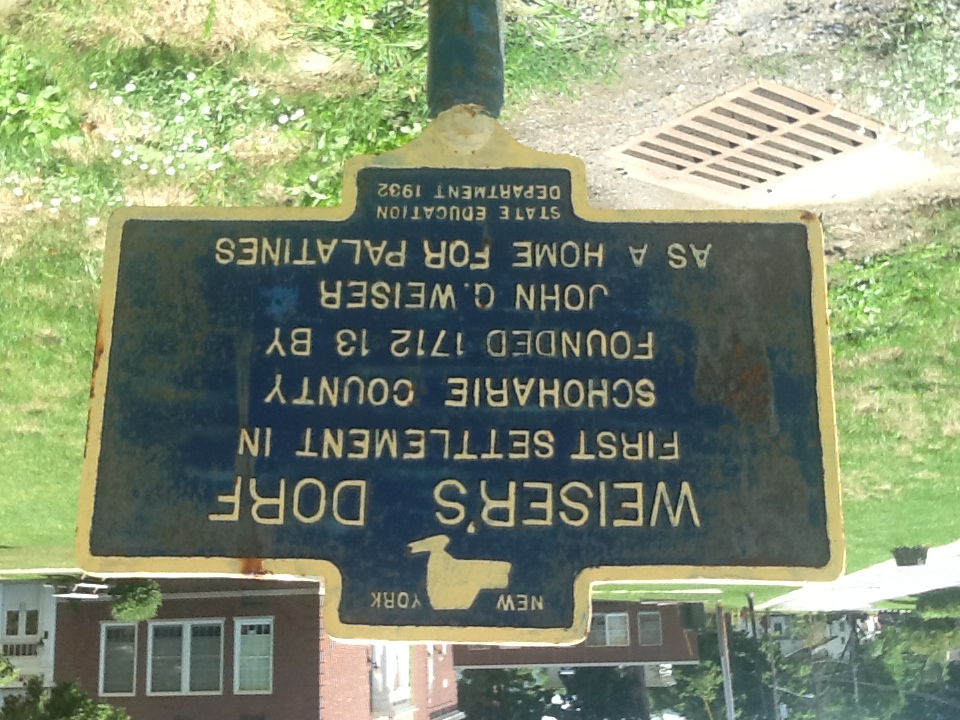
The Boy Among the Mohawk
In November 1712 a chief of the Mohawks, semi-settled farmers, came to the Weisers’ house and offered to take sixteen-year-old Conrad with him into the Mohawk lands so that he might learn the language. It was a bold request, addressed to a father who was only just trying to find his footing in a foreign land. The father consented. The son spent eight months in a Mohawk village, in cold and hunger, learning the language, the customs, the way of negotiating. He came back fluent. For the next forty-seven years he lived on what he had learned in those eight months.

So arose, almost incidentally, in a settler’s cabin in the back country, the most important intermediary between the worlds that colonial America would ever know.
The Man in the Middle
Conrad Weiser the younger became a diplomat among three constitutional orders: the British colonial governments in the east, the Six Nations of the Iroquois at Onondaga, and the dependent peoples on the Susquehanna and the Ohio. These three orders did not even think alike about what a treaty was in the first place. The Iroquois held it to be a relationship, kept alive by ever new meetings and gifts; the British held it to be a document signed once and for all. Weiser’s task was to bring these irreconcilable theories to the same results for thirty years. He succeeded. That is one of the reasons there was a Pennsylvania at all for the founding fathers to inherit later.
In the summer of 1744 he organized a conference in Lancaster that Weiser’s biographer Paul Wallace called a turning point in colonial history. The Six Nations met commissioners from Pennsylvania, Maryland, and Virginia. The French attempt to encircle the English colonies between the mountains and the sea was broken — not by a battle, but by a ratified relationship. The treaty was printed in Philadelphia by a certain Benjamin Franklin, who a year later sent a copy to friends in London, with the remark how much the English colonies might learn from these “ignorant savages.”
And the most famous moment fell on July 4, 1744 — exactly thirty-two years before the Continental Congress would adopt a different document on the same date. The Onondaga speaker Canassatego raised a bundle of arrows aloft. Unity, he said, had given the Six Nations strength among their neighbors; the colonies should do the same. Whatever befalls you, never fall out with one another. An Onondaga chief, speaking in Mohawk, translated by a man from Affstätt in Württemberg, told the English colonies how to become a nation — thirty-two years before they did it. The image of the bundle of arrows returns on the Great Seal of the United States, where the eagle to this day holds thirteen arrows in its talons.

One man had set those words in lead himself, and they would not let him go. In 1751 Franklin wrote to his business partner James Parker a sentence that took up Canassatego’s thought almost word for word: it would be “a strange thing if six nations of ignorant savages should be capable of forming a scheme for such a union … and yet that a like union should be impracticable for ten or a dozen English colonies.” Three years later, in 1754, as the next war with France was gathering, he laid before the assembly at Albany the first concrete plan for a common colonial government, the Albany Plan.
The colonies rejected it, and so did the Crown; no one yet wished to give up power. But the idea was in the world, and it was no longer forgotten. From Canassatego’s bundle of arrows through Franklin’s Albany Plan to the Continental Congress, which in 1776 at last did what the Onondaga had advised, ran a line of more than thirty years. How much the later constitution owes in detail to the Iroquois Confederacy is disputed among historians; that its example occupied the minds of the founders is not.
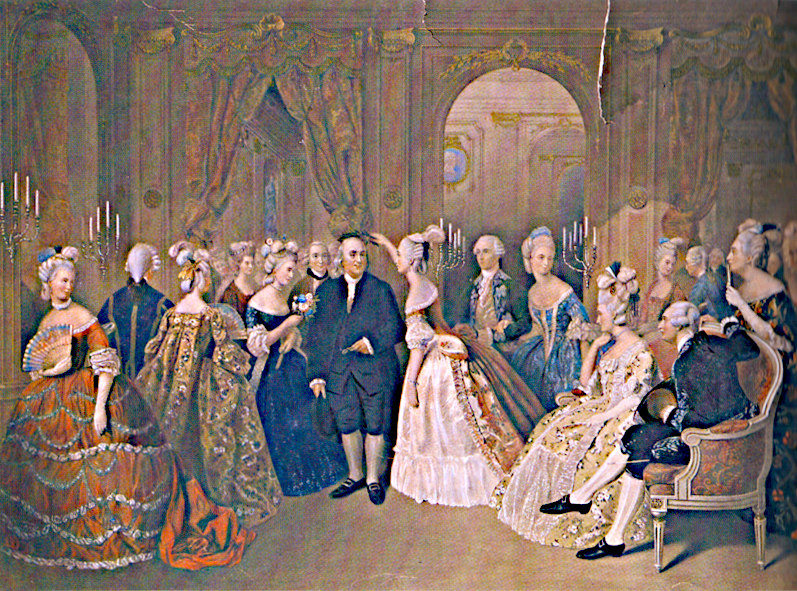
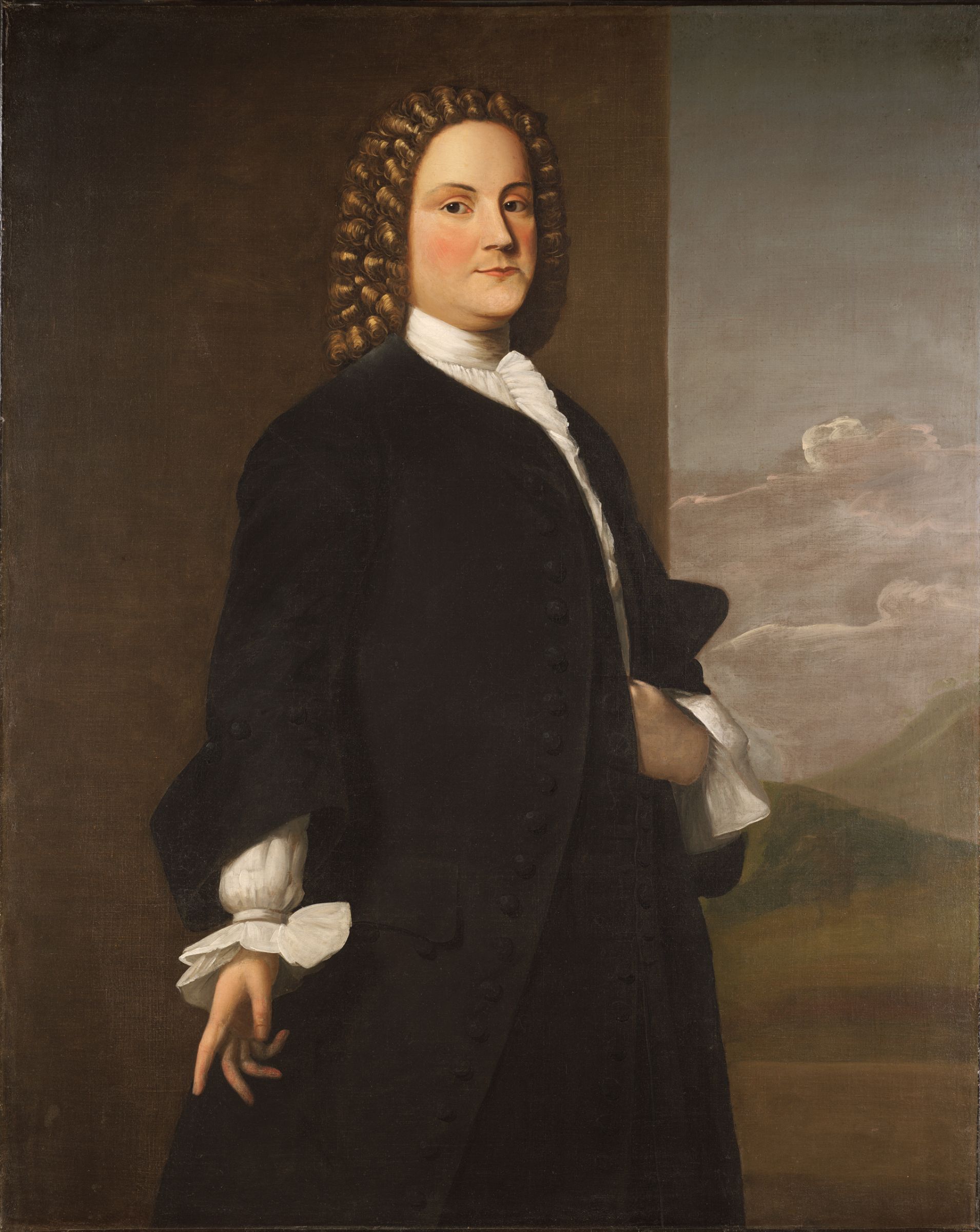
Let us pause a moment on this Franklin, for we will meet him more than once in this story, and one ought to know whom one is dealing with. At seventeen he had run away from Boston, a penniless printer’s apprentice; at forty-two he was rich enough to retire from business and pursue only what made him curious. That was almost everything. He caught lightning with a kite and invented the lightning rod; he ground the first bifocal spectacles; he built a more economical stove, which he never patented — whoever profits from the inventions of others, he wrote, should gladly give up his own. A self-made man, a tinkerer, a natural philosopher of European renown, and, when he was sent to Paris at seventy, a widower who visibly enjoyed the goodwill of the Parisian ladies. Above all, though, he was a man who did not merely think the possible but built it. That is precisely what this story is about. Let’s keep an eye on him.
Muhlenberg Plants the Church
Into this same world came, in November 1742, a young Lutheran pastor from the pietist Francke Foundations in Halle: Henry Muhlenberg. His task was peculiar. He was to build up a Lutheran church in a colony that guaranteed religious freedom but left the churches to themselves. There was no authority to assign him a congregation, no prince to fill the parishes. Ecclesia plantanda — a church must be planted — became his motto. Three years later he married Conrad Weiser’s eldest daughter, Anna Maria. Out of the Württemberg dragoon and the Halle pietist a family was made.
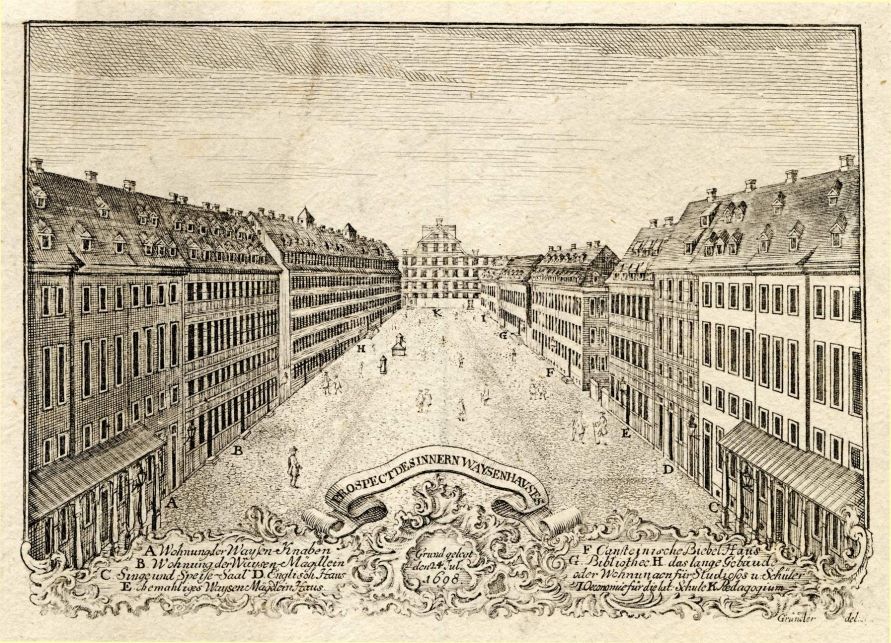
What Muhlenberg found in Pennsylvania existed in no European territory. Mennonites, Schwenkfelders, Moravians, Dunkers, Reformed, Lutherans, Catholics, Quakers, Anglicans shared townships, courthouses, the roads to market. None ruled over the other. Penn’s Charter of 1682 had called them all, and there came those who wished to escape the confessional conflicts of Central Europe and would not have dreamed of reintroducing them.
The result was a religious diversity within a single legal framework, without a ruling confession as the anchor of order — and precisely this created not chaos but a remarkably orderly civil society. Muhlenberg built his church solely on voluntary membership. That, long before a constitutional lawyer put it into words, was a lived separation of church and state.
Behind it stood a faith, and it was a peculiar one. As early as 1636, while the Thirty Years’ War was consuming a third of Germany, a renegade preacher named Roger Williams had founded the commonwealth of Providence on Narragansett Bay, with complete religious freedom for Christians of every confession, for Jews, for those wholly without belief.
The solution to Europe’s confessional catastrophe was built while Europe was still bleeding. Among the founding fathers this Protestant intuition later received a philosophical frame, Deism: God exists, he created a universe of rational laws, he does not intervene through miracles, he gave human beings reason so that they might govern themselves. God as architect, not as ruler.
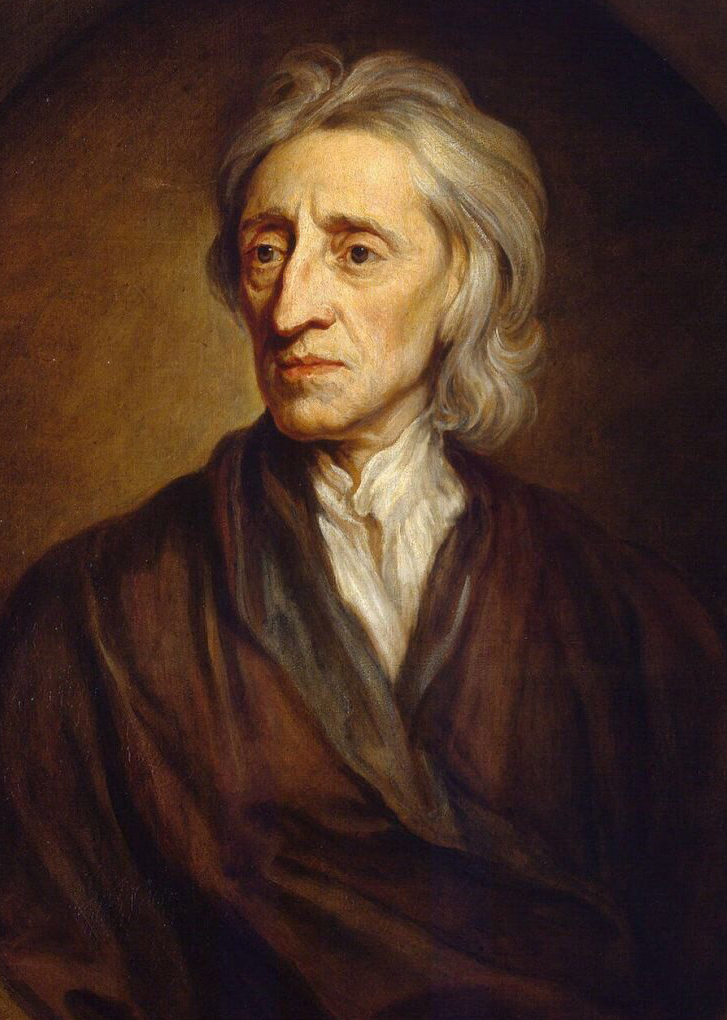
This frame did not come from nothing, and it came above all from England. There, where as late as 1664 those who doubted the Trinity were threatened with death, the freethinkers gathered — and one of their chief representatives was John Locke, the same man whose natural right Jefferson would write into the Declaration of Independence a generation later. Locke placed belief in God on perception and reflection rather than on revelation and book; his pupil John Toland carried it further.
Leibniz found the image still current today: God as clockmaker, who builds a perfect work, sets it going, and it has run by itself ever since. It was at heart the same thought as that of Roger Williams, only turned philosophical, and it reached clear across the Enlightenment — from Locke through Voltaire to Rousseau, all of whom knew a God of reason and not of miracles. That from this common ground such opposite designs of the state would later rise, the one starting from the individual, the other from the general will, was therefore not God’s doing. It lay with a different question, one we shall meet again: what a human being is.
And precisely here sits the faith from which this article takes its name. If God does not intervene, then human beings bear the full responsibility for the institutions they build. There is no divine guarantee. There is only the design — and the readiness to erect it. That is the belief in what is possible: not the certainty that it will turn out well, but the confidence that human beings with reason can build a self-governed order, if only they set about it. It is the builder’s faith. Berks and Lancaster County were the living proof that it held.
This faith carried not only churches and farms, it carried a safety net as well. Where no prince and no office cared for the poor, the sick, and the orphaned, congregation, cloister, and neighbor cared. Muhlenberg brought the pietist culture of care from Halle, an orphanage, a poor school, a pharmacy; the Ephrata cloister took in strangers and became a field hospital in the war; and in 1764 the Pennsylvania Germans founded the German Society, expressly to protect immigrants from the mistreatment against which Mittelberger had warned.
That was the other side of the order from below that the authoritarian eye overlooked: freedom from the state did not mean defenselessness. The net hung not vertically, from above, but horizontally, from neighbor to neighbor. Without this mutual aid no settler would have survived; a society of nothing but egoists would never have settled the continent. Alexis de Tocqueville marveled a generation later at precisely this, the American genius for joining together voluntarily where the European called for the authorities. Something of it is in the blood to this day, in the proverbially swift aid with which American country communities stand together in fire, flood, and disaster.
The Long Road to the Break
For three generations the Germans of Pennsylvania labored at this proof. Then the empire that had taken them in began to lose them.
One must place their role correctly. They were no majority, but no fringe group either: in Pennsylvania those of German descent made up about a third of the population by independence, according to some estimates closer to forty percent. Alongside them lived English Quakers, Scots-Irish Presbyterians, Welsh, Huguenots — Pennsylvania was a mixture, and that was precisely its essence. The Germans were eager to learn English quickly.
Benjamin Franklin had still asked with concern in the early 1750s whether the “Palatine boors” might not one day Germanize the colony and outvote the English. The fear was unfounded. The Germans saw the advantages of the English system — trial by jury, an elected assembly, secure property, religious freedom — very clearly, and they had left their German principalities behind them with deliberate care. No one wished to erect them again on the Susquehanna. They wanted to become citizens, not to remain subjects.
In the Seven Years’ War (1756–1763) — in North America the French and Indian War, in which Conrad Weiser was needed one last time as an intermediary — Great Britain drove France from the continent and doubled its territory. But the victory also doubled the national debt. For a century and a half London had largely left the colonies to themselves, in a “salutary neglect.” That was now over. The colonists were to pay.
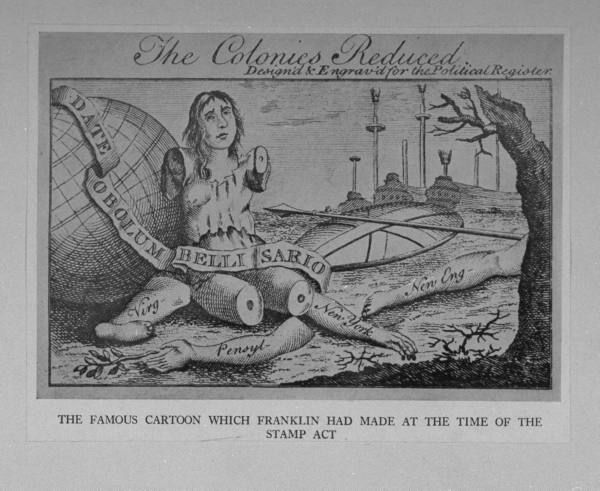
There followed a chain of tax laws: the Stamp Act of 1765, the first direct tax, which required stamped paper even for playing cards; the Townshend duties of 1767; the Tea Act of 1773. Against this rose the slogan no taxation without representation — taxes could be levied only by the elected representation of each colony, not by a parliament three thousand miles away. The real worry was the precedent: if one accepted this, what would come next?
Boston became the flashpoint. In 1770, in the Boston Massacre, five died, among them Crispus Attucks, of part African, part Indigenous descent. In 1773, men disguised as Indians dumped 342 chests of tea into the harbor at the Boston Tea Party. London closed the port. On April 19, 1775, the first shots fell at Lexington and Concord; in June, at Bunker Hill, the British army lost over a thousand men — a bloodletting such as the British would not experience again until 1916 at the Somme.
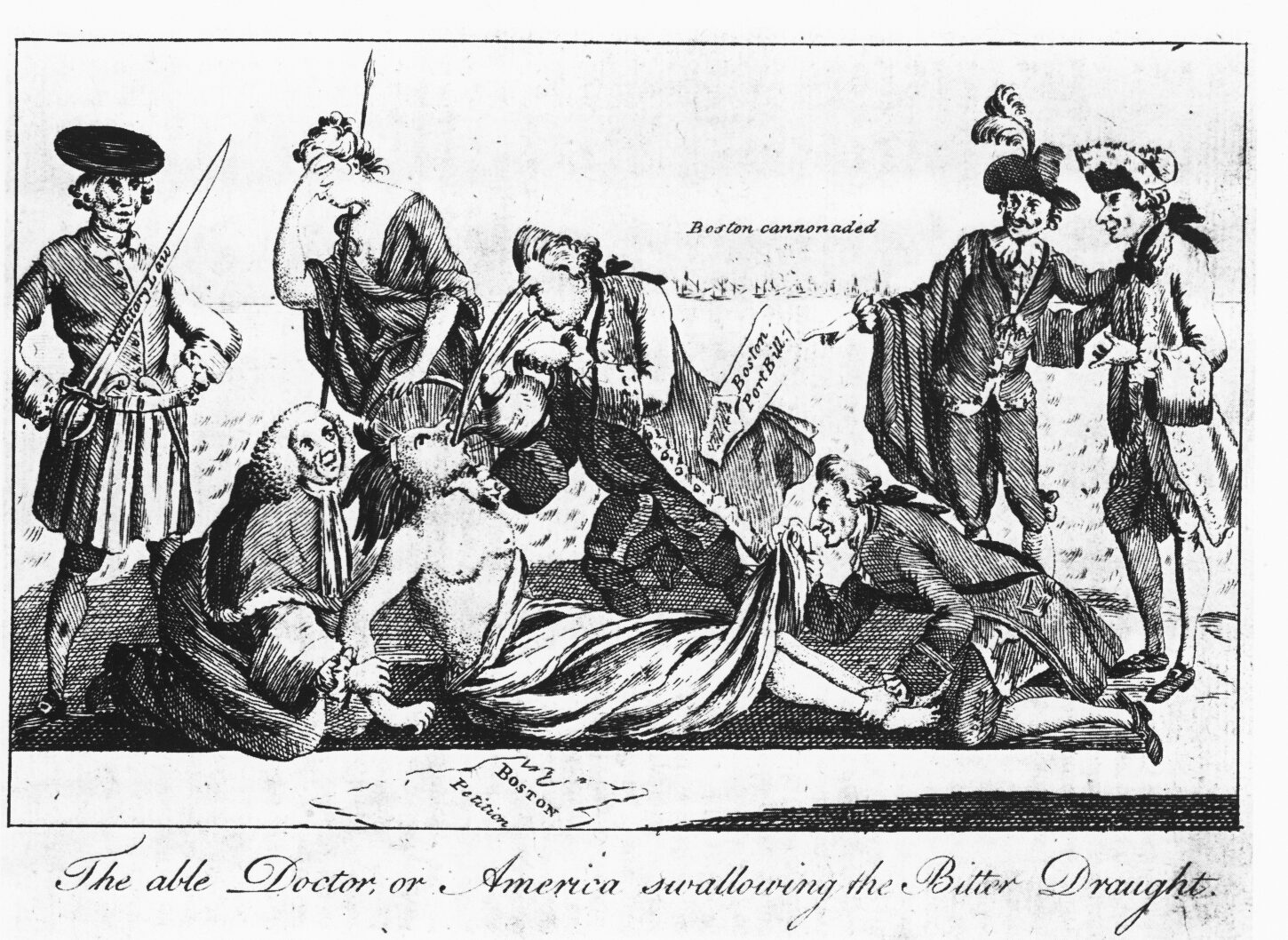
What that looked like from below is shown by a boy. John Greenwood, eight years old, watched spellbound in Boston in 1768 as the Afro-Caribbean fifers and drummers of the landed occupation troops passed by in their bright uniforms. He mended a cracked fife with putty, learned the tunes, became a militia fifer. At fourteen he marched alone, about a hundred miles in four and a half days, to Boston, playing along the way in the inns for board and lodging. “I am going to fight for my country,” he said. Such were those who bore the war: no marble heroes, but bakers, smiths, carpenters, boys — men who in danger simply grabbed their muskets.
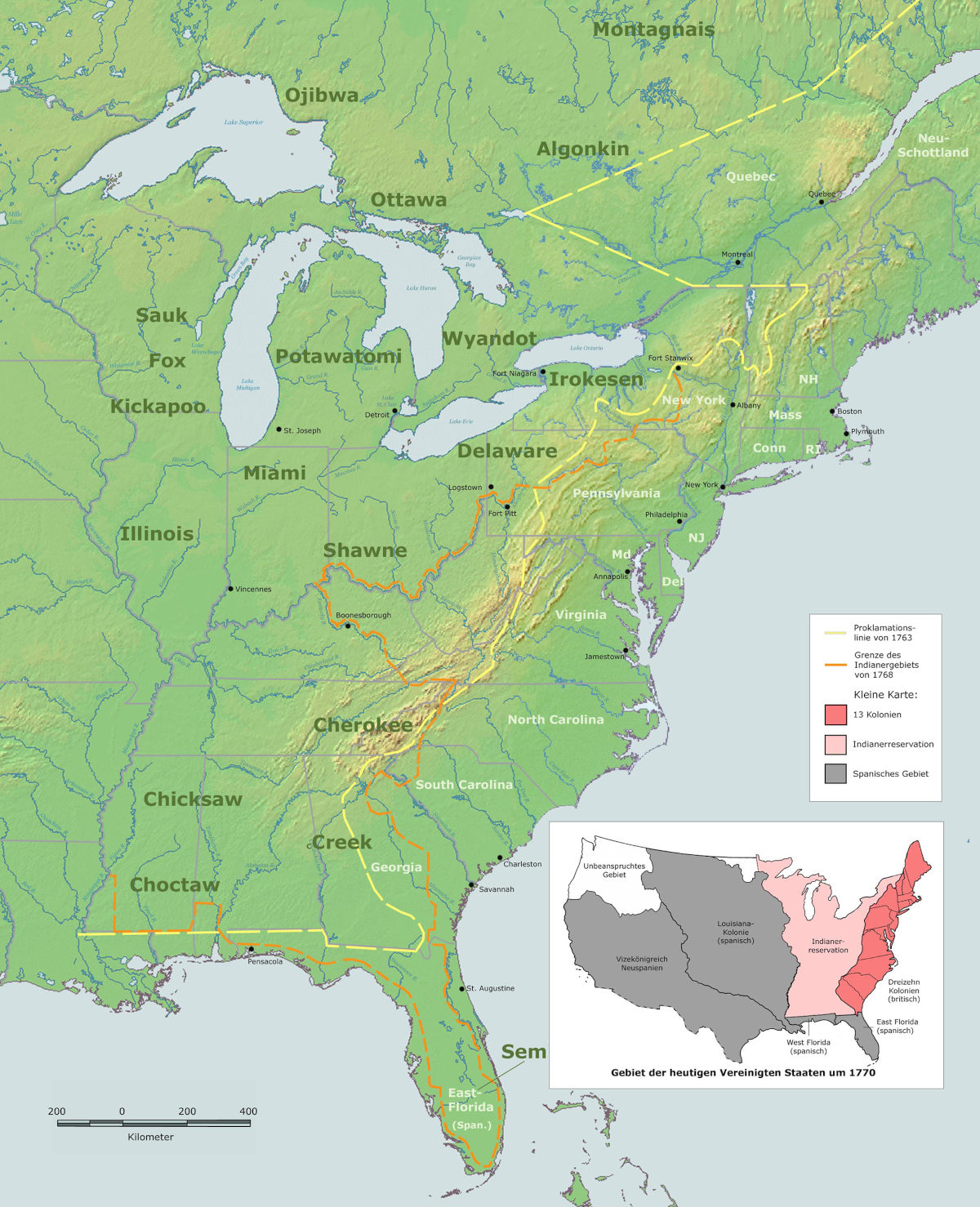
Beneath all of it lay, and the schoolbook myth likes to keep this quiet, a hunger for land. The Royal Proclamation of 1763 had forbidden settlement beyond the Appalachians, to keep peace with the Indians — and to keep the colonists governable and taxable. George Washington himself, a planter and one of the largest land speculators in the colonies, had his western tracts secured, proclamation or no proclamation. The freedom for which men soon took up arms was also the freedom to take this land for themselves.
One thing, however, that Europe likes to hear is not true: that this rebellion was a repudiation of the British tradition. It was its continuation. Had France won the Seven Years’ War, the order against which men rose up would have been a French one, and the line of thought would have run through Rousseau instead of Locke. America is the English tradition carried on, not abandoned.
1776 — The Decision
At first almost everyone hesitated. As late as the spring of 1776 many wanted only a loyal protest at the end of which the king would give the colonists their rights back. The decisive push came from a pamphlet. In January 1776 there appeared in Philadelphia Common Sense by Thomas Paine — a failed corset-maker, a dismissed tax collector, a penniless immigrant, a radical democrat out of the working class. Paine called the king “a beast in print” and spoke aloud what many thought: an island cannot rule a continent. The pamphlet pushed countless people toward independence.
How deep this man dug himself into people’s minds is shown by a page from an entirely different age. In December 1914, in the first winter of the World War, the New York newspaper The Truth Seeker printed Paine’s Rights of Man on the front page, as an indictment of the European bloodshed. Had the world listened to Paine, it said there, Europe would not now be “soaked in blood.” His most famous thought was quoted: that man “is not the enemy of man but through the medium of a false system of government”; one should not indict the individual kings but change the system. A hundred and thirty-eight years after Common Sense, the penniless corset-maker was still lodged in people’s minds — and an American held up to the old continent its own once-cast-off son.
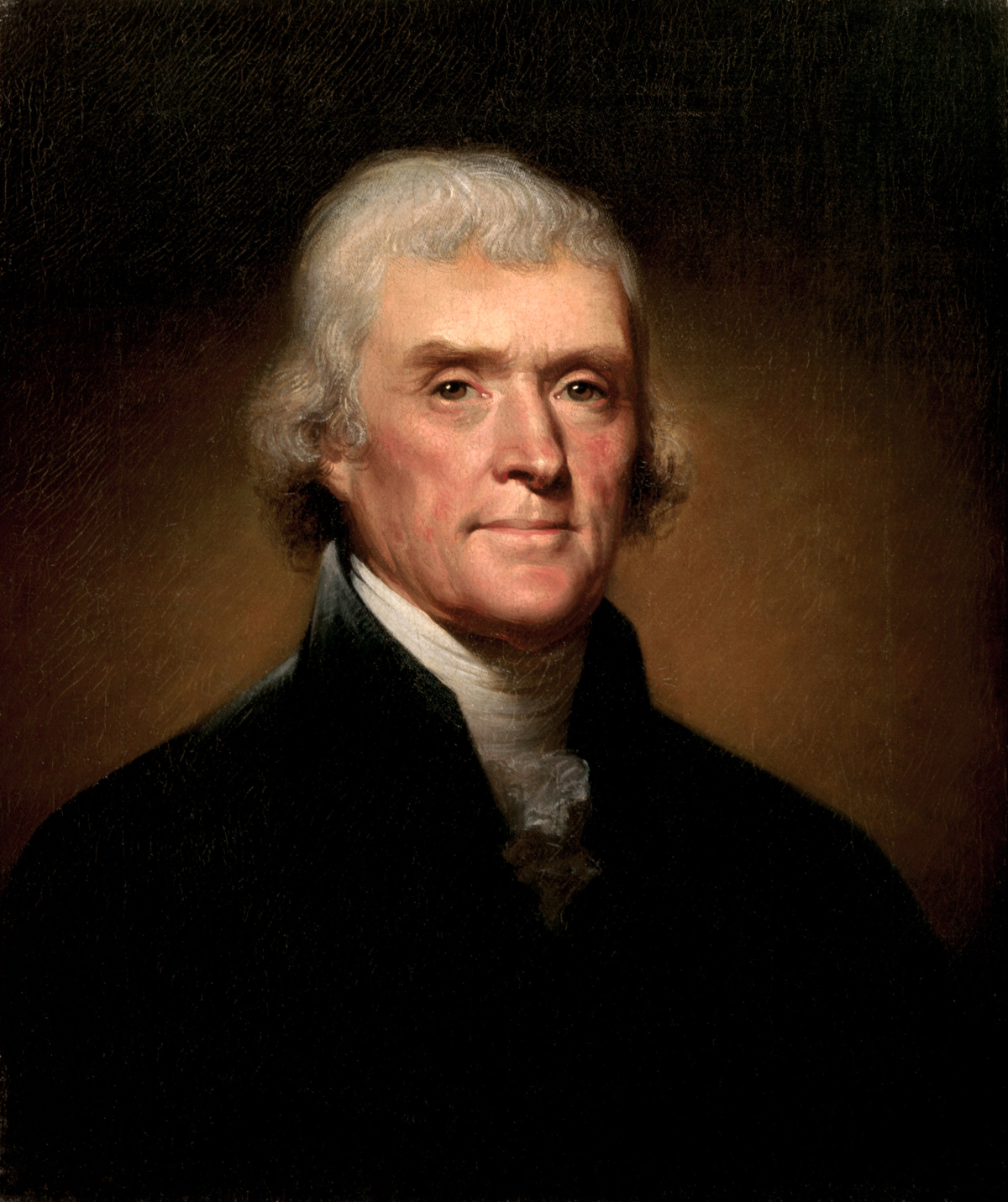
On July 2, 1776, the Congress in Philadelphia voted for independence. On July 4 it adopted the text that the thirty-three-year-old Thomas Jefferson had written in a rented room on Market Street, drawn from Aristotle, Cicero, and above all from John Locke. The tea he drank in quantities while doing so was brought to him by his fourteen-year-old enslaved servant Robert Hemings. In this single image lies the whole contradiction of which we must speak in a moment.
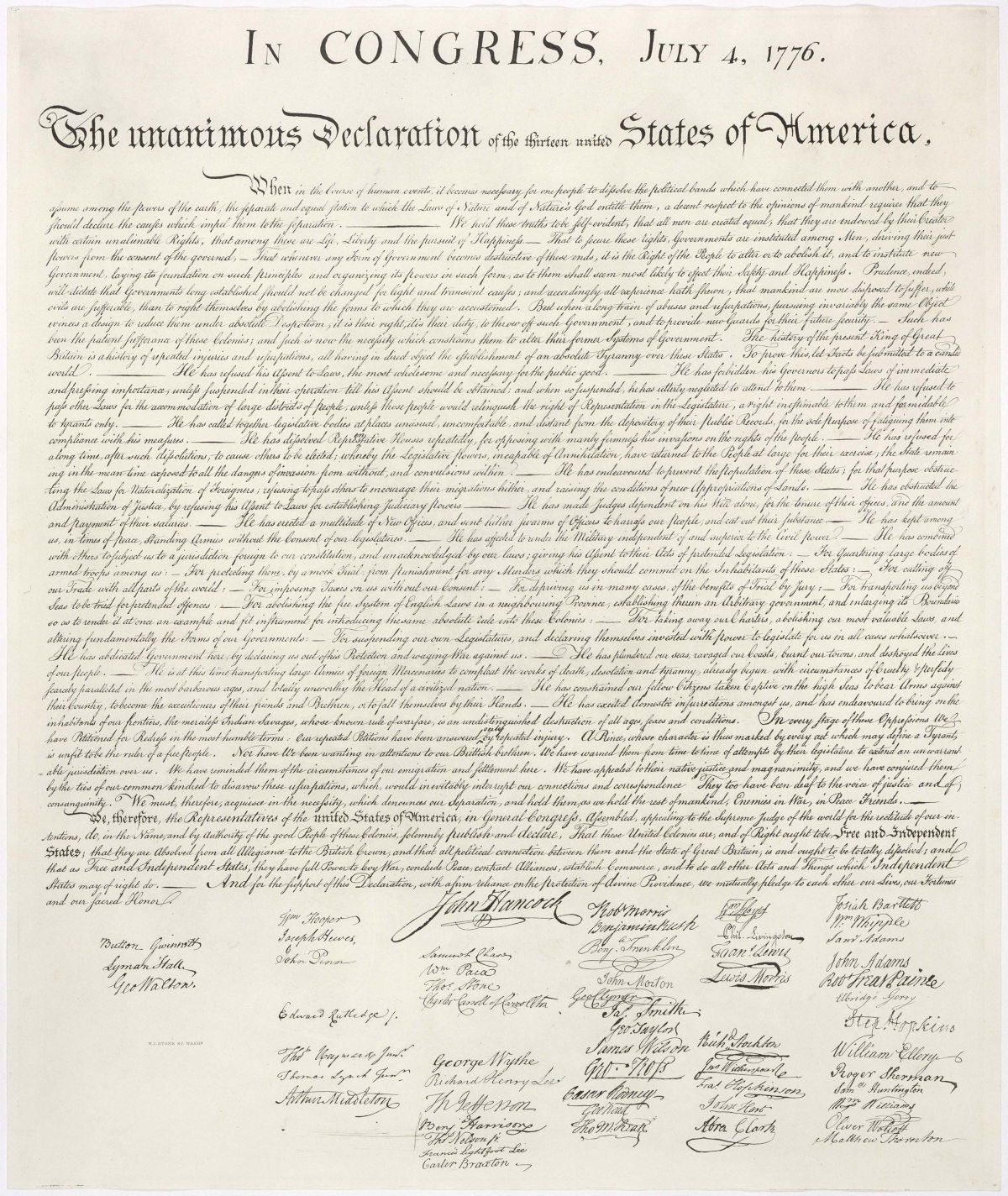
On what did the Declaration rest? On a sentence that stands to this day: that all men are created equal, endowed by their Creator with unalienable rights, among them life, liberty, and the pursuit of happiness. And on a second thought: that when a government violates these rights, the individual has the right of resistance. That is John Locke, thought through to the end. The individual is there first, with his rights; the state is his instrument, which must be bound so that it does not become the master. The phrase “by their Creator” carries the weight: rights that a government grants, it can revoke. Rights that the Creator grants, it cannot.
But which Creator? Around this 250th anniversary one hears from American podiums that our rights come from God rather than from government. On the second half of that the founders would nod; on the first they would ask for a footnote. Jefferson’s “Creator” — and the “Nature’s God” of his rough draft — was the deists’ remote architect, knowable through reason and nature, not the personal, intervening God of any one church. He put no God at all into the Constitution and insisted there be “no religious test” for office. The point was never that a particular deity had handed down a particular creed; it was that rights come before any government and any king, so that none may revoke them. On that much, deist and believer can still shake hands: the sentence holds whether one reads “Creator” as Nature’s God or as one’s own.
Fourteen years earlier Rousseau had written the opposite sentence in his Social Contract of 1762: that each places his person and all his power under the supreme direction of the general will. The individual does not enter the community with his rights, he surrenders himself to it. From this sentence came, in 1789, the French Revolution, and from the unlimited general will under Robespierre came the guillotine. Here lies the deepest divergence, and it is not a question of politics but a question of what a human being is. The continental tradition begins with the community and derives the individual from it; the Anglo-American begins with the individual and derives the community from him. America answered the question in 1776 in the one way. Continental Europe answered it in 1789 in the other — and chose that answer again at every great fork in the road thereafter, from Napoleon through Bismarck to the postwar welfare state.
The same Jefferson who wrote “all men are created equal” held human beings in slavery his whole life long, at least six hundred and seven; with one of them, Sally Hemings, he had several children, whom he never acknowledged as his own. His indictment of the slave trade was struck by the Congress. And yet he was no comfortable hypocrite. He saw the contradiction and trembled before it: “I tremble for my country when I reflect that God is just.” Slavery, he later confessed, one holds like a wolf by the ears, and one can neither hold it safely nor safely let it go.
The civil war that would tear apart the country he had helped to build he foresaw, and yet found no way out. Slavery was not only a contradiction, it was a driving force of the break: in November 1775 the royal governor of Virginia had promised freedom to all slaves of rebels who defected to the British. Thousands fled; from Washington’s Mount Vernon, Harry Washington escaped, born near the Gambia River. The enslaved read the sentence about freedom literally and fought, on both sides, for their own; at the war’s end about five thousand African Americans stood in the Continental Army.
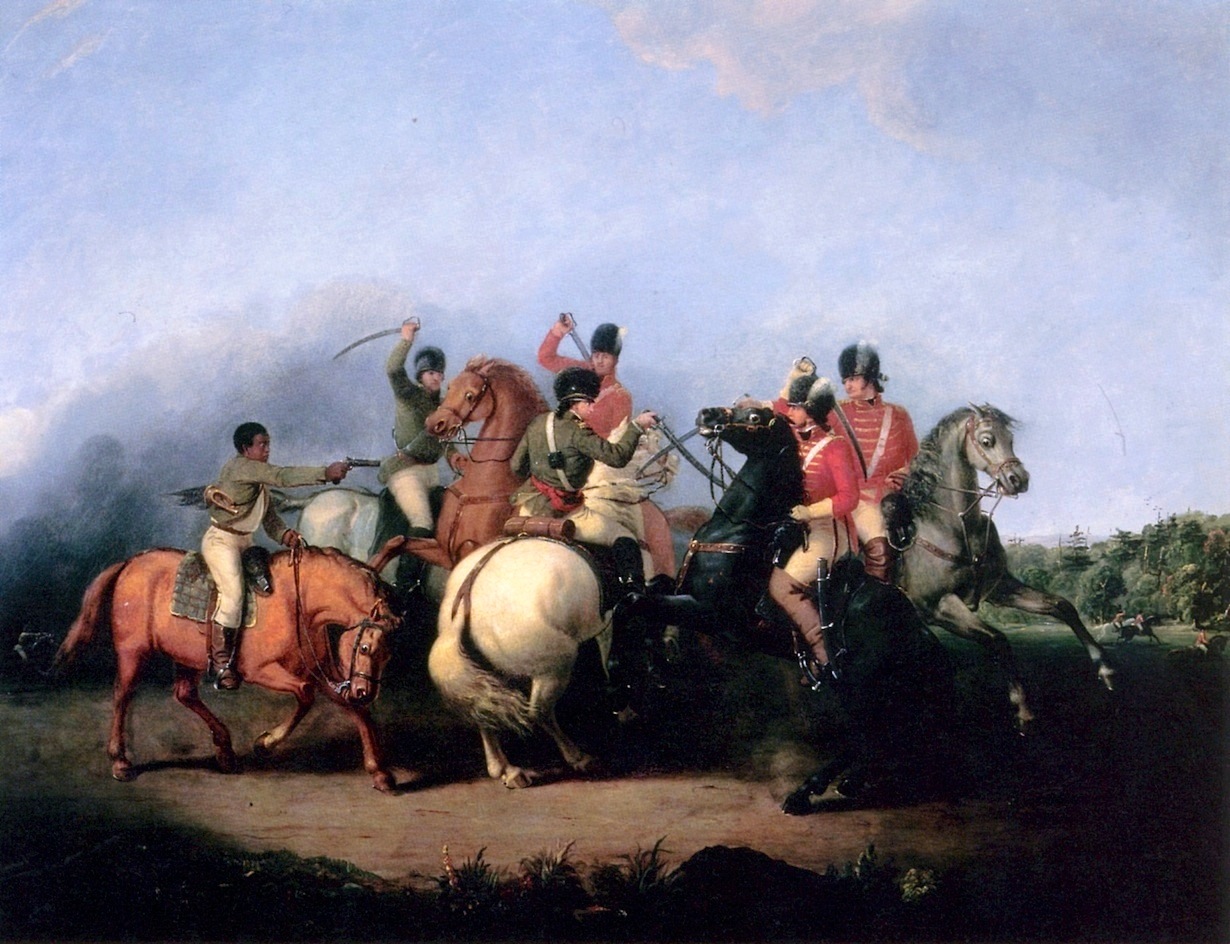
The Declaration reviled the Indigenous nations as “merciless savages”; in the peace of 1783 they were not even mentioned — the true losers of a war for freedom. And Abigail Adams, who had admonished her husband to “remember the ladies,” went unheard.
How could the same men do both, proclaim equality and live inequality? In part because the sentence came more easily on an empty page than anywhere else. America had no nobility to overthrow, no king in the land, no thousand-year order of estates; one could write radically equal because one did not first have to tear down an old world. Tocqueville said that the Americans were “born equal instead of becoming so.” And the sentence was cheaper, too, because “all men” in practice meant the propertied Europeans; whoever did not count as part of the “we” cost the celebration nothing. We see this easily today, and it should be said. Only one should not confuse the late overview with their view, nor the narrowness of their intent with the breadth of their words.
Here the ledger lies as open as it can be. But the Declaration wrote down the standard by which everything could henceforth be measured. It became the moral and legal lever for those at the margin: Lincoln invoked it, the opponents of slavery, the advocates of women’s rights, the civil rights movement.
The remarkable thing is how unsentimentally America lives with this open ledger. It neither denies it nor glosses over it; it can even say it aloud in a prime-time sitcom. In the series The Middle, a ruthless car dealer snaps at his employee, who does not want to work on Thanksgiving: “Well, so’s taking the country away from a bunch of Indians, but aren’t you glad we did?” Two sentences that carry the whole contradiction: it was wrong, and we live off its fruits. Hardly a European country would put this sentence into the evening program. To name one’s own guilt and in the same breath to go on living, without incense and without self-laceration, is itself a piece of the American character.
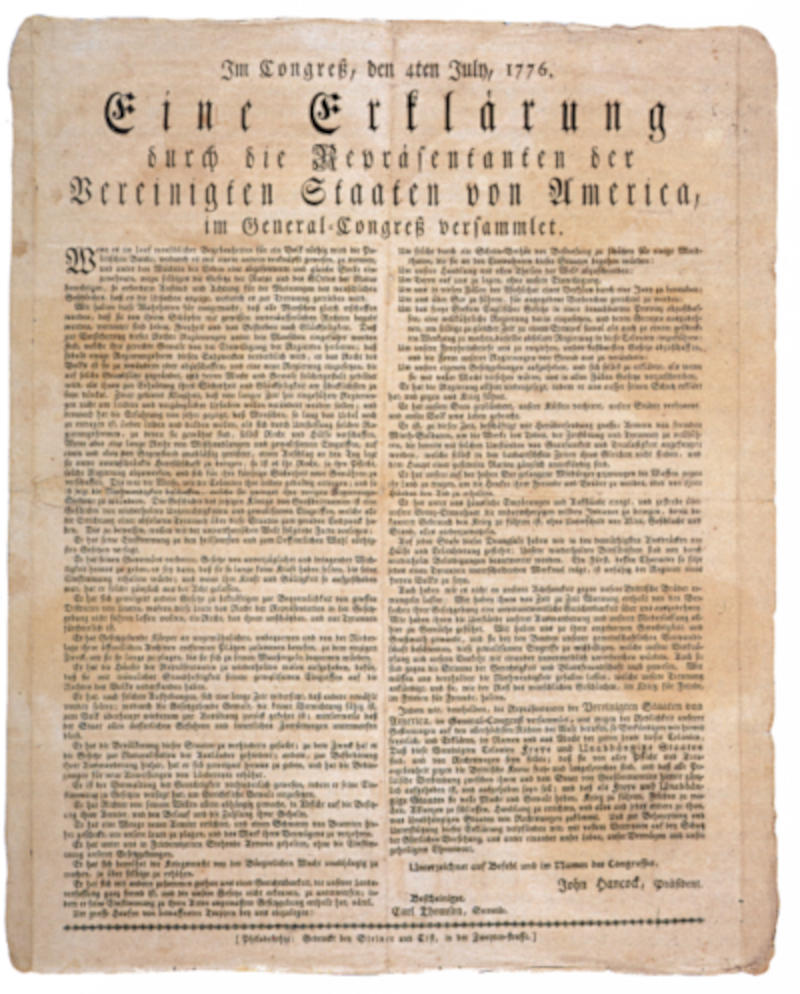
And now something that almost no one in Europe registered. The first foreign-language version of the Declaration was German. As early as July 5, 1776, a day before any English-language newspaper, the Pennsylvanischer Staatsbote of the printer Heinrich Miller in Philadelphia carried the first notice, in German; on July 9 the complete text. The Lutheran pastor Johann Christoph Kunze, a son-in-law of Henry Muhlenberg, took part in it. Before French, before Spanish, before Italian there was a German version — printed in Pennsylvania, by Germans, for Germans who had long lived by these principles.
But not all Germans rejoiced, and whoever hesitated had a weighty reason, one that weighed heavier than any tax, because it came from the Bible. In the thirteenth chapter of the Epistle to the Romans Paul writes: Let every soul be subject unto the higher powers. For there is no power but of God. For a believing Christian of the eighteenth century this was no pious addendum but the greatest obstacle of all. To rise against King George meant to rise against an order set by God — sin, not politics. Loyalist preachers, Anglicans as well as traditional Lutherans, held exactly this before the colonists.
The same text, however, could be read otherwise, and whoever read it otherwise decided the quarrel. In the fourth verse Paul calls the authority “the minister of God to thee for good.” Take that seriously, and the authority is bound to God’s order, and a ruler who becomes a tyrant has ceased to be “authority” in the apostle’s sense; to resist him is then not sin but duty. This reading was the heart of the Reformed, Calvinist tradition; the Scots-Irish Presbyterians carried a pronounced right of resistance in the blood since their wars of faith — so much so that loyalist mockers called the whole revolution a “Presbyterian rebellion.” The only active clergyman to sign the Declaration, John Witherspoon, was indeed a Presbyterian pastor.
Even the tiny, despised Catholic minority, barely one percent of the population, found its way around Romans 13: its late scholasticism — Thomas Aquinas, Robert Bellarmine, Francisco Suárez — had known the right of resistance against the tyrant for centuries. The only Catholic signer, Charles Carroll, one of the richest men in the colonies, helped finance the war; his cousin John Carroll later became, with Franklin’s advocacy, the first Catholic bishop of the United States. So the fault line that ran through the whole quarrel ran right through the interpretation of a single chapter of the Bible: does the authority stand above the conscience of the individual, or the conscience above the authority?
Hardest of all with this question wrestled those who came out of the Lutheran two-kingdoms doctrine, with its deeply rooted obedience to the territorial lord. This reflex was old. Already in the Thirty Years’ War, whose consequences had driven their ancestors out of Württemberg and other regions, many Lutherans had hesitated even to take up arms against the emperor, the God-appointed authority; the elaborated right of resistance had remained the affair of the Calvinists. A century and a half later, in the forests of Pennsylvania, the same question posed itself once more to the same congregations.
The old Muhlenberg wrestled with the document in his diary; at times he saw the war as a divine judgment for the sins of the colonists. For thirty-three years he had prayed publicly every Sunday for King George. After July 4 he stopped. After the first public reading on July 8 he noted only a single sentence and a Bible passage, Psalm 127:1: Unless the Lord builds the house, they labor in vain who build it. Three days later he took his sick wife and his ten-year-old daughter away from Philadelphia. He could not bring himself to live in a city whose new oath he had not yet been able to swear. His son Peter, however, as we shall see, gave the opposite answer — the same family, the same Scripture, two roads.
How Words Became Reality
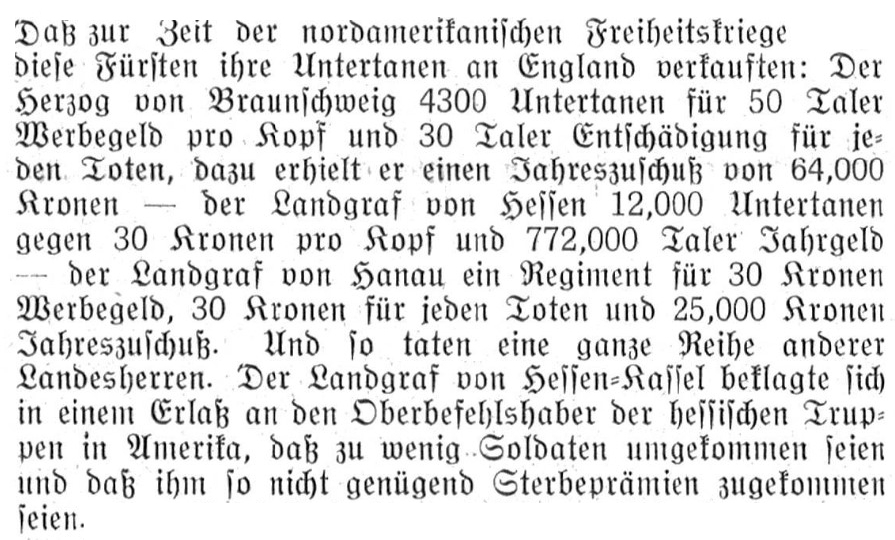
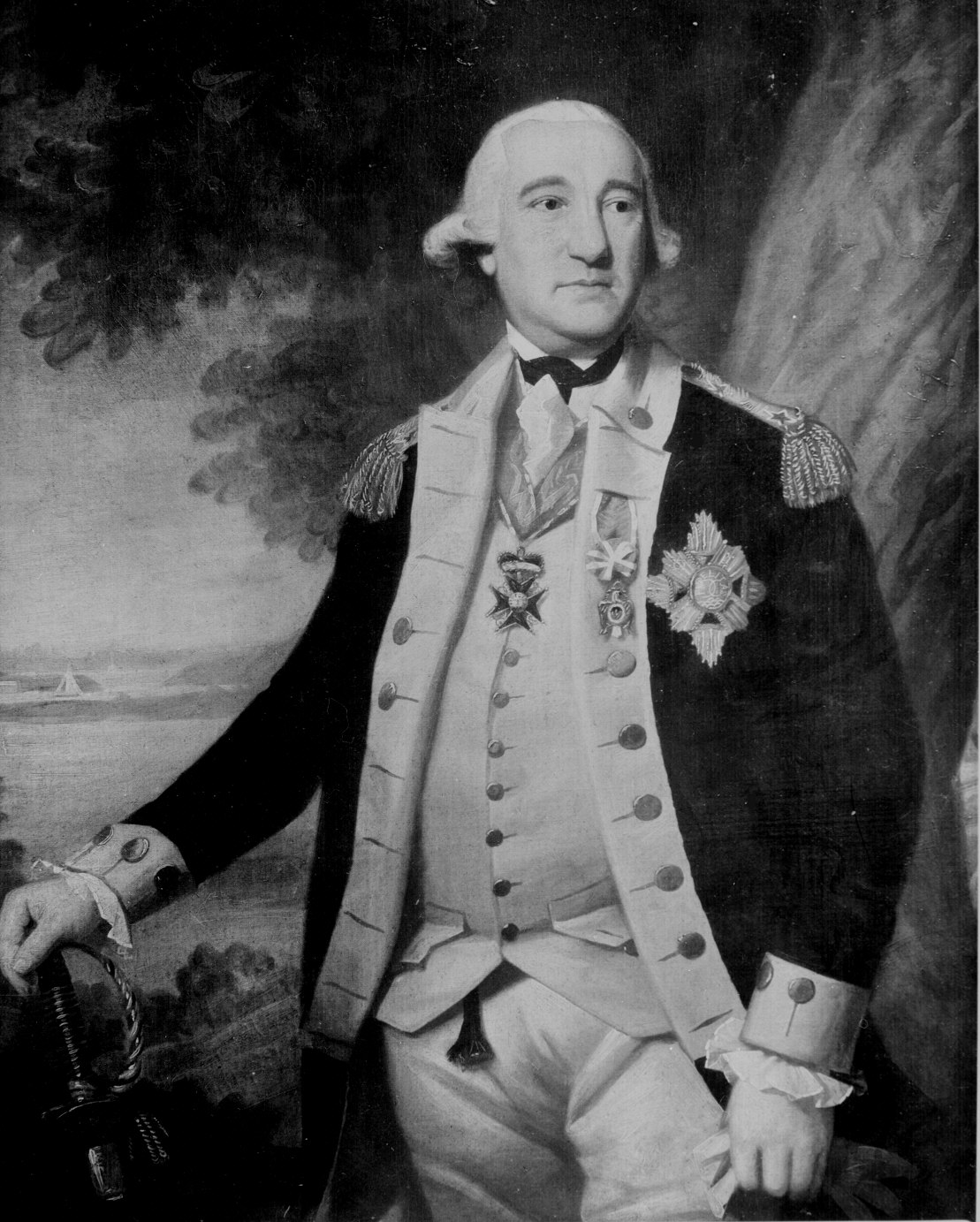
Words on paper are one thing. To defend them, another. The summer of 1776 became the darkest of the cause. Before New York the largest invasion fleet Great Britain had ever sent across the sea came in — about four hundred ships, twenty-four thousand soldiers, among them over eight thousand Hessians, German mercenaries whose princes had rented them out for subsidies.
Washington’s army was beaten at Long Island, retreated clear across New Jersey; of nineteen thousand men soon not three thousand remained. “I think the game is pretty near up,” he wrote. In this hour he had Thomas Paine’s new pamphlet read out before the troops: These are the times that try men’s souls … Tyranny, like hell, is not easily conquered. On Christmas night 1776 Washington crossed the drifting ice of the Delaware and at daybreak fell upon the Hessians at Trenton. Out of a game as good as lost, a bold stroke made a spark of new hope.
Among those who fought was a grandson of Conrad Weiser. Peter Muhlenberg, a Lutheran pastor in Woodstock, Virginia, is said to have ended a sermon by laying aside his robe to reveal the uniform of the Continental Army beneath it: there was a time to pray and a time to fight. It is documented that he raised the 8th Virginia Regiment, fought under Washington at Brandywine and Germantown, wintered at Valley Forge, and ended the war as a major general. The grandson of the Württemberg dragoon became an American general.
For the Declaration was, from the very beginning, also aimed outward. In its opening sentence it invoked “a decent respect to the opinions of mankind” — it was meant to be read, and read in Europe. Beside the appeal to natural rights and the catalog of twenty-seven charges against George III stood a third, the essential level: the claim to sovereign statehood and the plea to be admitted into the family of nations. Its audience was the courts of non-British Europe, above all France. The colonists were not to appear as rebels but as a nation with a just cause, one that others might in good conscience support. So 1776 was not only a birth certificate but a courtship for recognition — and whether it succeeded would decide victory or defeat.
The miracle came from two directions. In October 1777 an American army forced an entire British column to surrender at Saratoga — the psychological turning point. Benjamin Franklin, dispatched to Paris at seventy, needed exactly this proof; on February 6, 1778, France concluded recognition and a pact of assistance. And in the starvation camp of Valley Forge, where the army was dying by the thousands, “in the midst of a fertile land,” there appeared a Prussian, Baron von Steuben. He drilled the ragged troops in the lockstep, the column, the bayonet, and made an observation that explains the whole country. Of the Prussian, he said, you say “Do this, and he does it.” But of the American you must say: “This is the reason why you ought to do it.” Only then does he do it. Here the command from above met the order from below — and had to bow to it.
On October 19, 1781, Lord Cornwallis sat trapped at Yorktown, enclosed between the armies of Washington and Rochambeau and the French fleet. He surrendered with seven thousand men. In London Prime Minister North burst out: “Oh God, it is all over!” In 1783 the Peace of Paris recognized the thirteen states as free and sovereign. And Washington, who had won the war, laid down his command and went home — no Cromwell, no Caesar. Of the twenty-three thousand Hessians who survived the war, a quarter stayed in America; German-language broadsides had promised them fifty acres of land and freedom if they laid down their arms. The mercenaries who had been sent against the republic became its citizens. They too became builders.
.jpg)
The Translators
And now to what Europe made of it. While the German Pennsylvanians printed the Declaration, defended it, and after three generations of lived experience found it self-evident, there sat in Göttingen in 1777 a young scholar named Matthias Christian Sprengel, rendering it from French into German — one of the first German versions at all. Sprengel was conscientious. In the same issue he also explained why the Americans were in the wrong: the charges against the king were unproven, one had better read the British refutation by John Lind. The Declaration reached the German-speaking reader already bundled with its refutation.
Sprengel’s error was honest. Göttingen had been founded in 1737 by George II as Elector of Hanover; through the personal union, George III — the king of the twenty-seven charges — was Sprengel’s sovereign. To take the colonists’ side would have meant institutional suicide. But the revealing thing is the self-assurance with which he judged. He had no acquaintance with a single colonist. He had a translation and a British counterargument. That was enough to explain at length why the Americans were deceiving themselves.
A small, almost comic incident captures the asymmetry. In 1773 Benjamin Franklin published anonymously in London a satire, An Edict by the King of Prussia. His conceit: Frederick the Great issues a decree granting himself dominion over Great Britain — on the grounds that Germanic tribes had once settled the island. Every restriction that Frederick imposed on England was the parody of an actual British restriction on the American colonies. Franklin read the text aloud at the breakfast of a house party, watched the company grow indignant at the Prussian presumption, and waited until they noticed the joke.
In the German republic of letters the same inversion would scarcely have been intelligible: there were no German colonies, no relation of mother country and colony through which one might have felt the joke. Sprengel was commenting on a document out of a political imagination that had no German counterpart on the eastern side of the Atlantic — though it did have a considerable German population on the western side, which had helped build it.
What Sprengel did not see was no foreign object but a forgotten co-authorship. And it was more: it was the difference between translating and building. While he and his colleague Lichtenberg sat in Göttingen libraries and Goethe in his Weimar study, the Pennsylvania Germans had cleared forests, founded farms and communities, raised militias — and thereby furnished the empirical proof that the theorists’ premises worked. Religious diversity without a state church was in 1787 no thought experiment. It had been for a century the lived reality of Berks County.
And why did this order built from below hold, where so many orders from below ended in chaos? Because the builders built in an apparatus of distrust. James Madison put it in a single sentence in 1788: Ambition must be made to counteract ambition. Divided powers, competing states, a First Amendment that protects precisely the unwelcome speech — all of it was built not on the virtue of the actors but on their calculable self-interest. The state derived from Rousseau is a system of trust; the one derived from Locke a system of distrust. The one delivers brilliantly so long as it is well led, and has no brake when it is not. The other is not efficient, but resilient. It absorbed Andrew Jackson, the Civil War, the New Deal, the civil rights revolution, and two Trump elections, because the structure generates counterforces at every extreme.
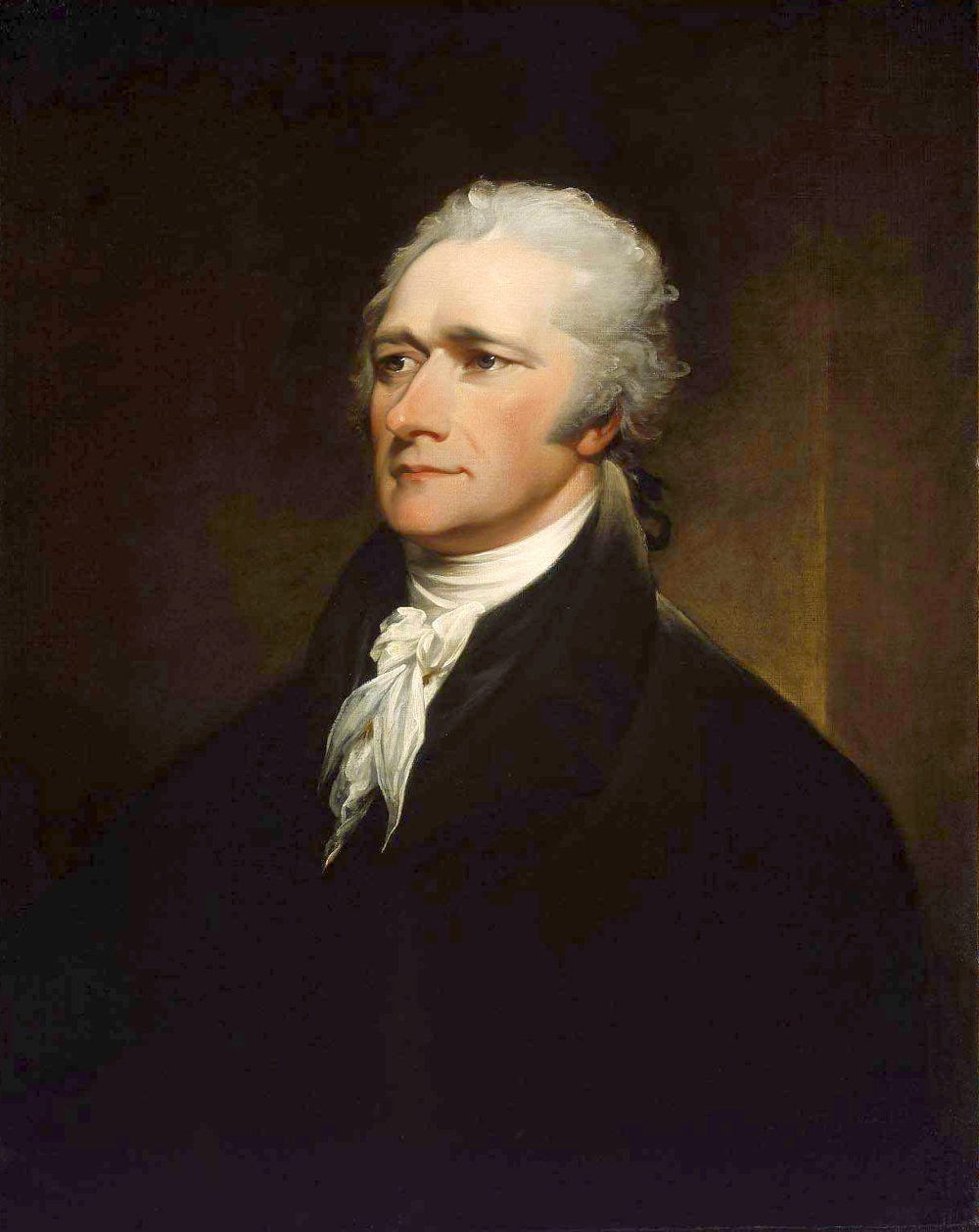
And the founding held more than one impulse. If Jefferson dreamed of a republic of independent farmers and a government kept small, another founder pulled the opposite way — and he, too, was an immigrant who built. Alexander Hamilton, born out of wedlock on a Caribbean island, orphaned and penniless, came to New York a nobody and rose by sheer intellect to become Washington’s aide-de-camp, a hero at Yorktown, and the first Secretary of the Treasury. He gave the young republic its financial spine — a national bank, the federal assumption of the states’ war debts, a vision of manufacturing and commerce — and with it the energetic central government that Jefferson feared. The founding contained both men: the individual-first minimalism and the builder-state that answers it. The system of distrust — ambition set against ambition — is exactly what let the republic hold that tension instead of being torn apart by it. And Hamilton is the German builders’ story once more, in a different key: America as the place where the penniless outsider can make himself.
One might take all this for a worry of 1777. But the real theme of this chapter is not a Göttingen professor but the chair on which he sat — the place of the translator, of the one who stands between a raw fact and the public and gives it a meaning. How much hangs on this chair was demonstrated in the summer of 2026 by a critique in the magazine Quillette of Steven Spielberg’s film Disclosure Day. There a weather announcer proclaims the truth to eight billion people at a single stroke — the aliens are real — and the world pauses in reverence, wars fall silent.
A lovely dream, writes the critic, and an illusion. For even in the film the truth does not speak for itself; it must be carried, through a chain of interpreters, and the chain holds only because each link is a saint: the incorruptible revealer, the almost holy announcer. Take away the saints, and what remains is what we really have — a public drowning in raw, unreadable information, and a struggle over who occupies the translator’s chair.
Precisely here it shows how far the builders thought ahead. They founded their order precisely not on trustworthy interpreters; they assumed there would be none, no saint in office, only human beings with interests, and set power against power. The system of distrust is the only constitution that does not collapse when the saints run out. The most dangerous translator of our time is therefore no longer the distant scholar who explains a declaration away, but the gatekeeper who poses as a revealer: who controls the files, determines their order, and then loudly asks what is being hidden from you. Against him no disclosure, however complete, helps — it is his precondition. Only the old, uncomfortable edifice helps, the one that never counted on saints.
Sprengel’s pattern runs on to this day. The objections changed — first primitive, then powerful, then vulgar, then imperialist, now at once in decline and dangerously overpowering —, the structure beneath remained the same: take the American argument seriously and then explain why it fails. There is a word for the addressee, the “abstract American.” The real American — the one sitting in a Lutheran church in Pennsylvania, driving a truck through Berks County — was rarely meant.
One more image: on election night 2013 someone handed Chancellor Angela Merkel a little black-red-gold flag; she set it aside. In Germany this counted as statesmanlike restraint. The American flag, by contrast, on the Fourth of July in every small town, belongs to the idea, not to an ethnic reading of the people; a Black veteran, a Hispanic immigrant, a white boy in a pickup wave it with equal conviction. Whoever has no relationship to his own flag understands only with difficulty why others love theirs.
The First Speaker and the Stone
The story closes where it began: with the Weiser-Muhlenberg family.
The younger Muhlenberg son, Frederick Augustus Conrad Muhlenberg, educated in Halle, left the pulpit for politics during the war years. On April 1, 1789, when the first Congress of the new republic reached a quorum in New York, he was chosen as the first Speaker of the House of Representatives. And when the Congress in September set on their way the amendments from which the Bill of Rights was made, he was the first to sign them. The grandson of a Württemberg dragoon, the son of a Halle pietist, presided over the chamber that wrote the First Amendment — that guarantee of religious freedom which his family had already lived in Pennsylvania for three generations.
A few miles west of Reading, in Berks County, on a road called Benjamin Franklin Highway, lies the estate that Conrad Weiser worked between his journeys to Onondaga and Lancaster. The old house still stands. Above it, on a small hill in the former orchard, lies a family cemetery. There Conrad Weiser is buried, beside his father, his wife, six children who died young — and, according to tradition, several Iroquois sachems who had asked to be allowed to lie beside him. In 1793, on the way back from a mission to the western tribes, George Washington stopped at this grave and is said to have remarked: Posterity will not forget his services. The sentence stands today on the monument. In Affstätt, the home village in Württemberg, there is nothing of the kind.
That, in the end, is the sense of this story for the 250th anniversary. The German misunderstanding of America was for two and a half centuries no failure of analysis — German analysis is often sharp. It was a failure of recognition. In America there is much that is not foreign to the Germans: the Lutheran congregational constitution, the Halle insistence on the inner conscience, the Württemberg work ethic in its Pennsylvania form, the principle that human dignity precedes the state. And there is, woven through the founding, the work of concrete German hands. None of it is hidden. And yet it has scarcely ever been forgotten — for one can forget only what one once knew. The emigrant who left fell out of the homeland’s memory as if the ship had carried him out of history; what became of him over there rarely reached back. So the German failure before America is less a forgetting than a never-knowing. And one does not recognize again what one has never seen.
And the Weiser-Muhlenberg family was only the first wave. Of the many that followed, the second was the most political and the loudest: the Forty-Eighters, refugees of the failed German revolution of 1848, this time not poor peasants but democrats, journalists, ardent opponents of slavery. One of them, Carl Schurz, became a Union general, a U.S. senator, and secretary of the interior. They shaped the Midwest, the young Republican Party, and the struggle against slavery — and are today as forgotten in Germany as the builders of Berks County.
1776 was no foreign spark that happened to catch. It was the writing down of what Penn had dreamed and what Weiser and Muhlenberg had lived, before Jefferson put it into words: the belief that human beings, if only they dare, can build an order in which the individual comes first and the state serves him. The belief in what is possible. The builders lived it. The translators translated it and at once explained why it could not hold. It has held for two hundred and fifty years.
Let one go up the small hill west of Womelsdorf in July 2026, read what Washington said, and ask, in plain German: Wasn’t he one of us, too?
He was. He is. The stone still stands.


.svg)

.svg)
